
Features
What you get inside JobPanic
Two years of job-search pain in Toronto went into this. Every feature is here because something was missing when it mattered.
Does your folder look like this?
When you apply for a job, does the process look like this?
- Copy the job description.
- Copy your resume points.
- Paste everything into AI.
- Adjust the output.
- Paste it back into your resume.
- Repeat for the next role.
Then when HR calls, are you sitting there wondering which version of your resume you even sent?
After a technical interview, do you tell yourself you'll remember the questions and experience — and then forget the details a week later?
If this sounds familiar, JobPanic is built for you.
Resume designs
Three templates that actually work. Simple beats flashy when it comes to getting past ATS and into interviews.
AI resume optimization
Targeted prompts that highlight your real experience for the job. We don't keyword-stuff or make your resume sound fake.
Multiple resume profiles
Different roles need different resumes. Create profiles (e.g. DevOps, Backend) and pick the right one per job.
Resume + job saved together
Every optimized resume is saved with the job and JD. When HR emails back, you know exactly which version you used.
Notes on job cards
Add notes and interview learnings on each job. Your resume and JD are right there—no more guessing later.
Control and analytics
See how you're applying, which resumes you used, and your success rates. Learn and adjust your approach.
Workflow
How it fits together
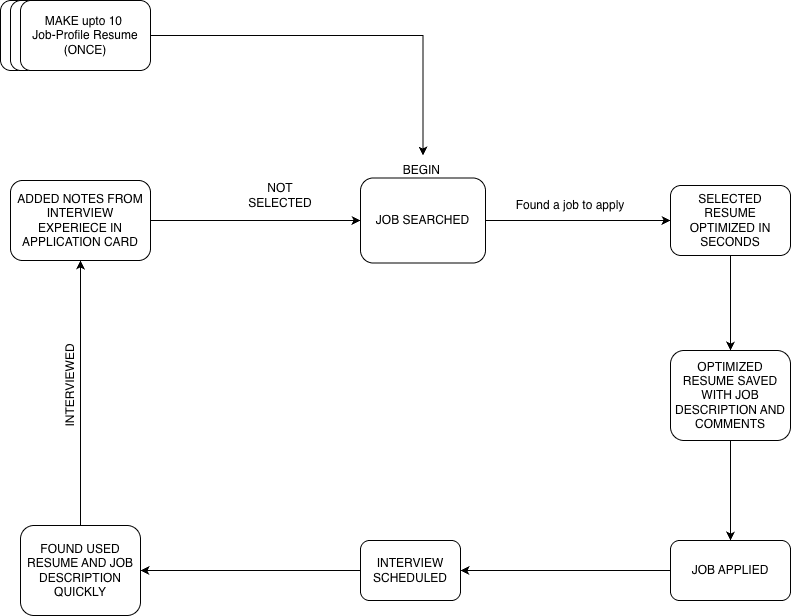
One clear loop: search → optimize → save with JD → apply → interview → notes. Repeat.
The story
Why JobPanic exists
Since 2024, job hunting hasn't just been difficult—it's been draining. JobPanic comes from that place. Every feature here exists because something was missing when I needed it most.
I'm a DevOps engineer in Toronto with five years of experience. I moved to Canada in mid-2023 with over four years of foreign work experience and a lot of confidence. That confidence didn't last long. For the next year and a half, nothing worked the way I thought. I'd get one response in two months after applying to over 1,000 jobs. I eventually found the job I came here for—but getting there broke a lot of assumptions I had about work, hiring, and myself.
The noise of job panic from Instagram, Twitter, Reddit, and my inbox turned into the energy to build JobPanic: a place for people who are still in that tense application stage, so they don't have to go through it alone.
Points that kept me going
- It will take time.
- You need to apply a lot.
- Imagine you're told you'll get selected on your 34,000th application. Would you quit—or apply and get there? Same process.
- Who is more desperate to learn, to grow through projects, to apply in 20 different ways? That person gets the job.
Honest advice
A few more things
Cover letters
I never heard back when I used a cover letter; I did when I didn't. If a job really matters, write it yourself—no AI. JobPanic doesn't write cover letters.
Resume optimization
"Match 95–100% of the job description" isn't the truth. Your resume has to show real, relevant experience. Keyword stuffing won't get you far—and if it gets you in the room, you won't last.
HRs aren't fools
Treat them as smart. Thinking they're stupid leads to bad resumes, ATS hacks, and skipping real learning.
Where to apply
Prefer company career pages. In my experience, if the chance of a reply from a career site is 1 in 50, LinkedIn was more like 1 in 500—even with a solid resume.
Even if you get a job by tricks, you won't last two salaries. There's no escape from doing real projects and real work."
Ready to take control of your job search?
Join others using JobPanic to stay organized and land the right role.